
Navigating Pediatric Temper Tantrums: A Neurobiological and Relational Framework for Clinicians
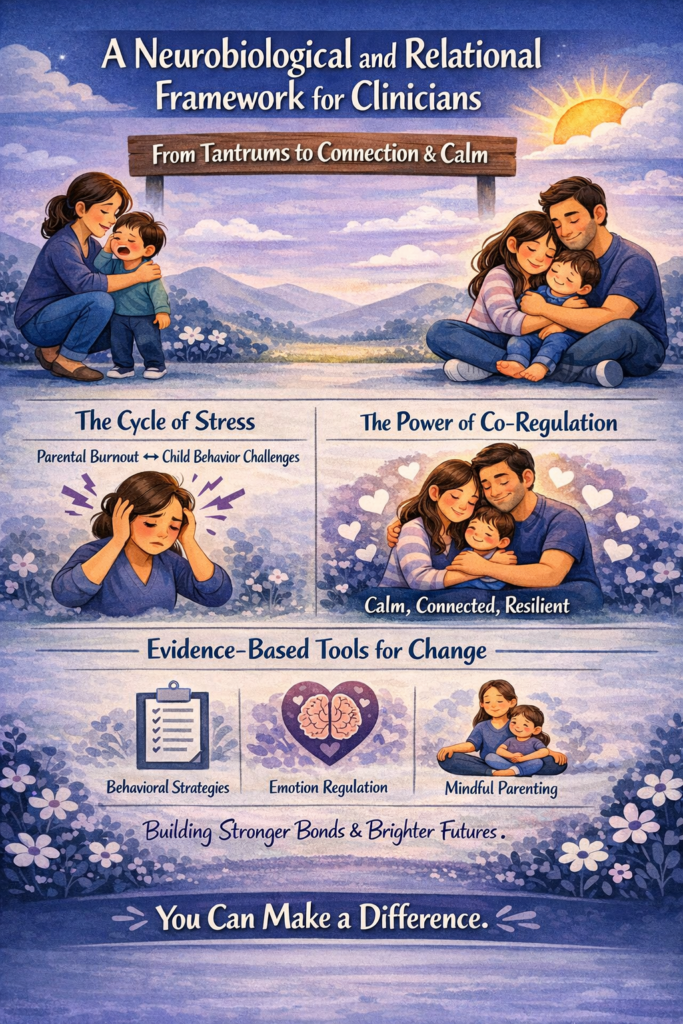
Temper tantrums in young children, characterized by outbursts of anger and distress, represent a significant challenge for parents and a common reason for seeking clinical guidance. A neurobiological perspective reframes tantrums not as manipulative behavior, but as an expression of overwhelming emotional processes within an immature nervous system. Research analyzing tantrum organization reveals two distinct but overlapping components: an initial peak of anger that declines, followed by a slower rise in distress and comfort-seeking behaviors [2]. This model underscores the child’s shift from protest to a need for connection, highlighting the critical role of parental co-regulation.
The Bidirectional Influence of Parental Stress and Child Behavior
The parental response to a tantrum is profoundly influenced by the parent’s own psychological state. A substantial body of evidence demonstrates a bidirectional, cyclical relationship between parental burnout and child externalizing behaviors; parental stress exacerbates child behavior problems, which in turn increases parental burnout [4], [3]. This dynamic is rooted in physiology. Adversity and stress are linked to decreased parent-child behavioral and neural synchrony, disrupting the dyad’s ability to co-regulate [6]. A parent’s history of adverse childhood experiences (ACEs) can predict dampened physiological synchrony with their child, an effect that is notably buffered by high-quality parent-child relationship dynamics [5].
This evidence supports a paradigm shift from focusing solely on child behavior modification to recalibrating the parent-child relational system. The goal becomes interrupting reactive cycles and fostering a sense of safety within the nervous system, which is the foundation of programs like the Neuro-Behavioral Reset. This approach aligns with principles of interpersonal neurobiology, which emphasize that co-regulation is essential for the development of a child’s own self-regulation skills [14].
Evidence-Based Interventions: From Behavior to Emotion
Behavioral Parent Training (BPT) is a well-established, first-line treatment for early-onset behavior disorders, with robust evidence for its short-term effectiveness in reducing disruptive behaviors like tantrums [12], [8]. Interventions such as Conjoint Behavioral Consultation (CBC) have demonstrated significant decreases in temper tantrums while improving parents’ use of effective strategies [1].
However, research increasingly highlights the importance of parental emotion regulation (ER) as a key mechanism of change [9], [13]. A meta-analysis found that psychosocial interventions, including BPT and Acceptance and Commitment Therapy (ACT), produce small-to-medium effects on improving emotion regulation in children (d = 0.37, 95% CI [0.22, 0.51]) [7]. A randomized clinical trial comparing Emotion-Focused (EF) training to BPT found that while both reduced child conduct problems, EF was superior in reducing parental stress and improving parental ER, whereas BPT was more effective in reducing child ADHD symptoms and dysregulation [10]. Similarly, a Cochrane review found that mindfulness-enhanced parenting programs may offer moderate reductions in parenting stress (SMD -0.51, 95% CI -0.84 to -0.18), though evidence for other benefits remains of low certainty [11].
For parents, a foundational step is developing awareness of their own patterns and parenting style. Tools like a Parenting Style Assessment can provide initial insights, which can then be developed through structured, evidence-informed guidance. Comprehensive programs, such as those offered through Parent Coaching Sessions – Parent From Love or the Parent From Love Experience, integrate science-based education on child development and ER, equipping parents with practical methods to foster co-regulation and build secure attachment, thereby mitigating the cycle of stress and reactivity [10], [14].
Temper tantrums in young children, characterized by outbursts of anger and distress, represent a significant challenge for parents and a common reason for seeking clinical guidance. A neurobiological perspective reframes tantrums not as manipulative behavior, but as an expression of overwhelming emotional processes within an immature nervous system. Research analyzing tantrum organization reveals two distinct but overlapping components: an initial peak of anger that declines, followed by a slower rise in distress and comfort-seeking behaviors [2]. This model underscores the child’s shift from protest to a need for connection, highlighting the critical role of parental co-regulation.
The Bidirectional Influence of Parental Stress and Child Behavior
The parental response to a tantrum is profoundly influenced by the parent’s own psychological state. A substantial body of evidence demonstrates a bidirectional, cyclical relationship between parental burnout and child externalizing behaviors; parental stress exacerbates child behavior problems, which in turn increases parental burnout [4], [3]. This dynamic is rooted in physiology. Adversity and stress are linked to decreased parent-child behavioral and neural synchrony, disrupting the dyad’s ability to co-regulate [6]. A parent’s history of adverse childhood experiences (ACEs) can predict dampened physiological synchrony with their child, an effect that is notably buffered by high-quality parent-child relationship dynamics [5].
This evidence supports a paradigm shift from focusing solely on child behavior modification to recalibrating the parent-child relational system. The goal becomes interrupting reactive cycles and fostering a sense of safety within the nervous system, which is the foundation of programs like the Neuro-Behavioral Reset. This approach aligns with principles of interpersonal neurobiology, which emphasize that co-regulation is essential for the development of a child’s own self-regulation skills [14].
Evidence-Based Interventions: From Behavior to Emotion
Behavioral Parent Training (BPT) is a well-established, first-line treatment for early-onset behavior disorders, with robust evidence for its short-term effectiveness in reducing disruptive behaviors like tantrums [12], [8]. Interventions such as Conjoint Behavioral Consultation (CBC) have demonstrated significant decreases in temper tantrums while improving parents’ use of effective strategies [1].
However, research increasingly highlights the importance of parental emotion regulation (ER) as a key mechanism of change [9], [13]. A meta-analysis found that psychosocial interventions, including BPT and Acceptance and Commitment Therapy (ACT), produce small-to-medium effects on improving emotion regulation in children (d = 0.37, 95% CI [0.22, 0.51]) [7]. A randomized clinical trial comparing Emotion-Focused (EF) training to BPT found that while both reduced child conduct problems, EF was superior in reducing parental stress and improving parental ER, whereas BPT was more effective in reducing child ADHD symptoms and dysregulation [10]. Similarly, a Cochrane review found that mindfulness-enhanced parenting programs may offer moderate reductions in parenting stress (SMD -0.51, 95% CI -0.84 to -0.18), though evidence for other benefits remains of low certainty [11].
For parents, a foundational step is developing awareness of their own patterns and parenting style. Tools like a Parenting Style Assessment can provide initial insights, which can then be developed through structured, evidence-informed guidance. Comprehensive programs, such as those offered through Parent Coaching Sessions – Parent From Love or the Parent From Love Experience, integrate science-based education on child development and ER, equipping parents with practical methods to foster co-regulation and build secure attachment, thereby mitigating the cycle of stress and reactivity [10], [14].
References
- Susan M Sheridan, Amanda L Witte, Shannon R Holmes, ChaoRong Wu, Sonya A Bhatia, Samantha R Angell. The efficacy of conjoint behavioral consultation in the home setting: Outcomes and mechanisms in rural communities. Journal of school psychology. 2017. PubMed
- Michael Potegal, Michael R Kosorok, Richard J Davidson. Temper tantrums in young children: 2. Tantrum duration and temporal organization. Journal of developmental and behavioral pediatrics : JDBP. 2003. PubMed
- Yaping Yue, Jiayuan Lei, Haojie Yuan, Yifei Zhao, Jinghui Zhang. Parental burnout as a mediator between fathers’ parenting stress and preschoolers’ emotional-behavioral problems: an urban-rural comparative study. BMC psychology. 2025. PubMed
- Aline Woine, Virginie Dardier, Moïra Mikolajczak, Isabelle Roskam. Bidirectional and transactional effects between parental burnout and child internalizing and externalizing behaviors. Journal of family psychology : JFP : journal of the Division of Family Psychology of the American Psychological Association (Division 43). 2025. PubMed
- Sarah A O Gray, Jonas G Miller, Erin B Glackin, Virginia Hatch, Stacy S Drury. Parent-child relationship quality buffers the association between mothers’ adverse childhood experiences and physiological synchrony. Journal of child psychology and psychiatry, and allied disciplines. 2025. PubMed
- Caroline P Hoyniak, Laura E Quiñones-Camacho, M Catalina Camacho, Jenna H Chin, Elizabeth M Williams, Lauren S Wakschlag, Susan B Perlman. Adversity is Linked with Decreased Parent-Child Behavioral and Neural Synchrony. Developmental cognitive neuroscience. 2021. PubMed
- Kristin Espenes, Anita J Tørmoen, Kristian Rognstad, Karianne H Nilsen, Pamela M Waaler, Tore Wentzel-Larsen, John Kjøbli. Effect of Psychosocial Interventions on Children and Youth Emotion Regulation: A Meta-Analysis. Administration and policy in mental health. 2025. PubMed
- Maria Helander, Pia Enebrink, Clara Hellner, Johan Ahlen. Parent Management Training Combined with Group-CBT Compared to Parent Management Training Only for Oppositional Defiant Disorder Symptoms: 2-Year Follow-Up of a Randomized Controlled Trial. Child psychiatry and human development. 2023. PubMed
- Laura G McKee, Yexinyu Yang, April Highlander, Madison McCall, Deborah J Jones. Conceptualizing the Role of Parent and Child Emotion Regulation in the Treatment of Early-Onset Behavior Disorders: Theory, Research, and Future Directions. Clinical child and family psychology review. 2023. PubMed
- Ghazaleh Zargarinejad, Joann Wu Shortt, J Mark Eddy, Saeed Ebadi Zare, Banafsheh Gharraee, Hojjatollah Farahani, Asma Aghebati, Elham Shirazi. A Randomized Clinical Trial Comparing the Effectiveness of Emotion-Focused and Behavioral Parent Training in Families of School-aged Children with Attention-Deficit/Hyperactivity Disorder. Child psychiatry and human development. 2025. PubMed
- Rebecca Featherston, Jane Barlow, Yunshan Song, Zoe Haysom, Brenda Loy, Lea Tufford, Aron Shlonsky. Mindfulness-enhanced parenting programmes for improving the psychosocial outcomes of children (0 to 18 years) and their parents. The Cochrane database of systematic reviews. 2024. PubMed
- Annelieke M Roest, Ymkje Anna de Vries, Albert W Wienen, Peter de Jonge. Commentary: The evidence base regarding the long-term effects of childhood mental disorder treatments needs to be strengthened – reply to Dekkers et al. (2023). Journal of child psychology and psychiatry, and allied disciplines. 2023. PubMed
- Robyn E Metcalfe, Maggie L Osa, Jeremy A Jones, David S DeGarmo. Emotion Regulation, Coercive Parenting, and Child Adjustment: A Serial Mediation Clinical Trial. Clinical practice in pediatric psychology. 2022. PubMed
- Cara Dosman, Sheila Gallagher. Parenting principles primer. Paediatrics & child health. 2022. PubMed
FAQs
Q1: What is biologically happening during a child’s temper tantrum?
A1: Research indicates a tantrum is not a single emotional state but a process. It typically begins with a rapid peak of anger, which then declines. This is followed by a slower, more sustained increase in distress behaviors like crying and comfort-seeking, suggesting a shift from protest to a need for emotional support.
Q2: Is it more effective to focus on my child’s behavior or my own stress levels?
A2: Evidence suggests they are inextricably linked in a bidirectional cycle. While Behavioral Parent Training (BPT) is effective for child symptoms, newer Emotion-Focused (EF) interventions show greater benefits for parental stress and emotion regulation. A comprehensive approach addresses both the parent’s capacity for co-regulation and the child’s behavior.
Q3: Do parent training programs have long-term effects on child behavior?
A3: Parent training programs are well-documented to be effective in the short-term for reducing disruptive behaviors. While there is some evidence for longer-term effects, particularly for behavioral parent training, experts agree that the overall evidence base for long-term effectiveness needs to be strengthened with more rigorous research.
Q4: Can a parent’s own childhood experiences influence how they handle their child’s tantrums?
A4: Yes, research shows a mother’s adverse childhood experiences (ACEs) can predict dampened physiological co-regulation (synchrony) with her child. However, this negative effect can be buffered by a high-quality, sensitive parent-child relationship, highlighting the power of the current relationship to mitigate the impact of past trauma.